
Owner-Operated Infrastructure: Why Some Home Projects Belong in the Alternatives Allocation
When investors think about alternative investments, they often think about private equity, private credit, infrastructure funds, hedge funds, real estate partnerships, or venture capital. Rarely does anyone mention their electrical panel, foundation, solar array, or HVAC system.
Perhaps they should.
For decades, homeowners have viewed major home improvements as expenses. A roof replacement, foundation repair, electrical upgrade, or solar installation was simply money spent on maintaining a home. Yet many of these projects share characteristics with the very alternative investments that investors increasingly allocate to in pursuit of diversification, income, and long-term returns.
The comparison is not perfect, but it is surprisingly useful.
In many cases, homeowners may be overlooking an asset class sitting right under their roof: owner-operated infrastructure.
The Third Portfolio
Most families actually manage three portfolios, whether they realize it or not.
The first is their financial portfolio:
- Stocks
- Bonds
- Cash
- Alternative investments
The second is their human capital portfolio:
- Education
- Skills
- Career development
- Professional networks
The third is their household infrastructure portfolio:
- Electrical systems
- Roofing
- HVAC systems
- Foundation and drainage
- Solar generation
- Battery storage
- Insulation
- Water systems
Traditional financial planning spends considerable time discussing the first two portfolios. The third often receives attention only when something breaks.
Yet for many families, the value of their home infrastructure may rival or exceed their allocation to alternative investments.
The question is simple:
If you have $25,000, $50,000, or $100,000 available to deploy, is the highest and best use of that capital always found in financial markets?
Sometimes the answer may be yes.
But not always.
Thinking Like an Infrastructure Investor
Private infrastructure funds often market themselves using remarkably similar language.
They seek investments with:
- Essential services
- Durable demand
- Long useful lives
- Inflation protection
- Predictable cash flows
- High barriers to entry
- Limited economic sensitivity
Consider how closely those characteristics describe certain home projects.
A foundation stabilization project protects the structural integrity of the home.
A solar array produces recurring utility savings.
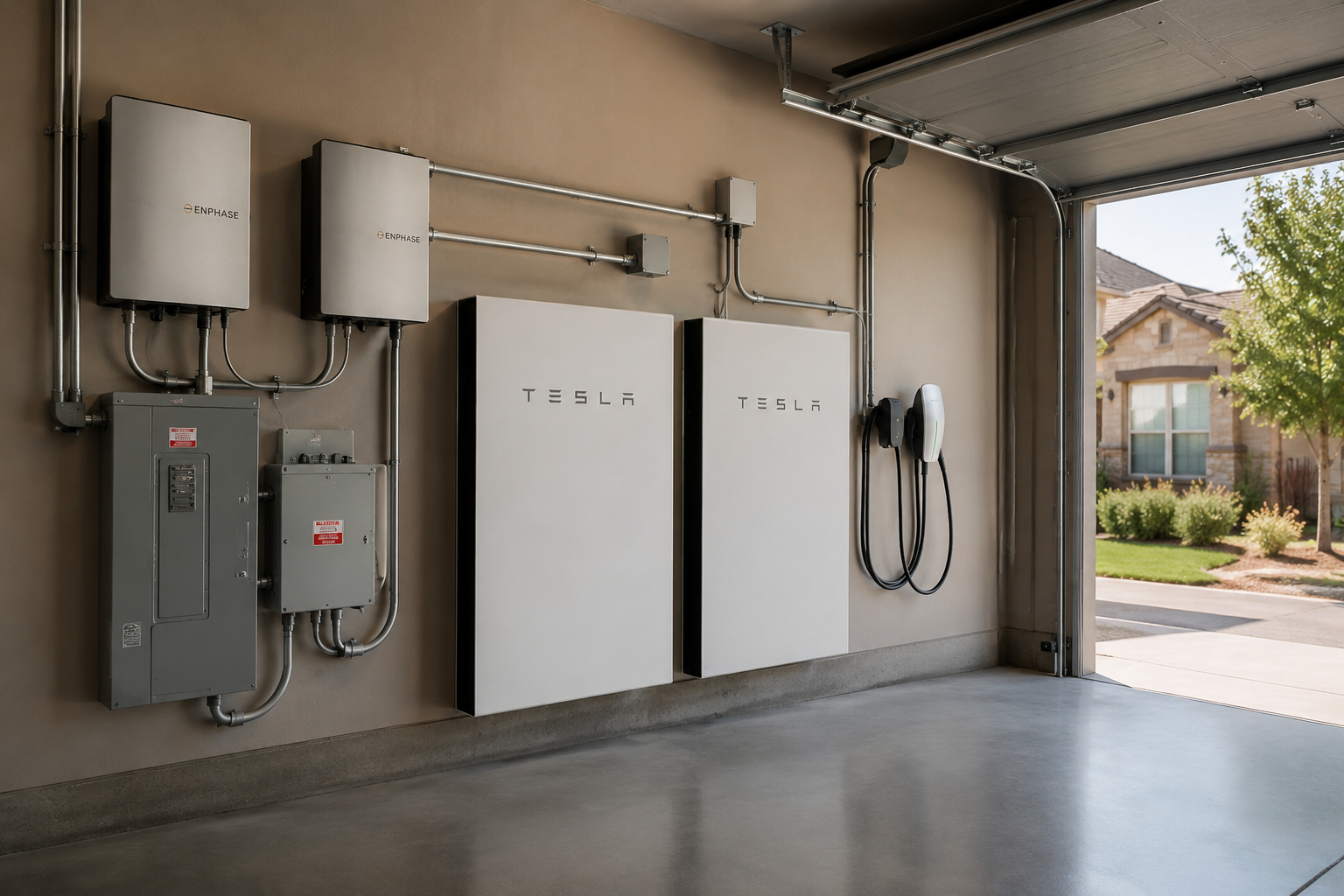
A battery system stores energy and increases resilience.
An electrical service upgrade supports future technologies such as electric vehicles, heat pumps, and energy storage.
These are not luxury purchases. They are infrastructure investments.
The Homeowner’s Infrastructure Fund
Imagine a homeowner allocating $40,000 toward the following projects:
- Electrical service upgrade
- Whole-home surge protection
- EV charging circuit
- Solar installation
- Battery storage
Most people would view this as a series of expenses.
An investor might view it differently.
The capital is committed for many years.
The investment is illiquid.
The expected benefits accumulate gradually over time.
The project may generate recurring economic benefits.
That sounds remarkably similar to how many private investments operate.
The primary difference is that the homeowner directly controls the asset.
Understanding Return Beyond Appreciation
One reason home projects are often misunderstood is that homeowners focus almost exclusively on resale value.
They ask:
“Will this increase my home’s value by the amount I spend?”
That is often the wrong question.
Private infrastructure investors rarely evaluate projects solely on resale value. Instead, they examine the broader economic impact of the asset.
Home infrastructure projects can generate returns in several ways.
Utility Savings
Solar panels may reduce electricity purchases for decades.
Improved insulation may lower heating and cooling costs.
Heat pumps may reduce energy consumption compared to older systems.
These savings function much like cash flow from an investment.
Risk Reduction
Foundation repairs may prevent significantly larger future costs.
Drainage improvements may reduce water damage risk.
Electrical upgrades may reduce fire hazards and equipment damage.
Avoided losses are economic benefits, even if they do not appear as income.
Marketability
Many infrastructure projects improve the attractiveness of a home.
A modern electrical system, EV charging capability, newer roof, or documented foundation repair can increase buyer confidence and reduce transaction friction.
These benefits may not always appear in appraisals, but they can influence days on market, inspection negotiations, and final sale prices.
Future Flexibility
An upgraded electrical system may enable:
- Solar
- Battery storage
- Heat pumps
- Induction cooking
- Electric vehicle charging
In finance, this would be called an option value.
The ability to pursue future opportunities has value even before those opportunities are exercised.
Comparing Home Infrastructure to Private Credit
Suppose an investor has $50,000 available.
Option one is a private credit investment yielding approximately 8% annually.
Option two is a solar and battery project.
The private credit investment may provide income but also generates taxable earnings and remains subject to credit risk.
The solar and battery project may provide:
- Reduced utility expenses
- Inflation protection
- Potential tax credits
- Backup power capability
- Increased marketability
- Personal utility and convenience
Neither investment is perfectly liquid.
Neither offers guaranteed returns.
Both involve long-term commitments.
The key difference is that one delivers purely financial benefits while the other may provide both financial and lifestyle benefits.
Why Smart Energy Systems Change the Conversation
Historically, homes consumed infrastructure.
Electricity came in from the grid.
Natural gas arrived through pipelines.
Water flowed through municipal systems.
The homeowner consumed these services.
Today’s homes are increasingly becoming active participants in infrastructure networks.
Solar panels generate electricity.
Battery systems store energy.
Smart energy management systems optimize consumption.
Electric vehicles function as mobile energy assets.
Some systems may eventually participate in virtual power plant programs or demand response initiatives.
In effect, portions of the home begin operating more like miniature utility systems.
This evolution makes the comparison to infrastructure investing even more compelling.
The Importance of Liquidity
Every investment carries a liquidity profile.
Public stocks can typically be sold within seconds.
Private equity funds may lock up capital for years.
Home infrastructure projects are also illiquid.
That should not be viewed as a flaw.
Rather, it should be evaluated honestly.
Questions worth asking include:
- How long until benefits are realized?
- What portion of the investment is likely recoverable?
- How durable are the benefits?
- How dependent is the outcome on future market conditions?
The same due diligence applied to alternative investments can be applied to major home projects.
Not Every Project Qualifies
It is important to distinguish between consumption and infrastructure.
A luxury kitchen renovation may provide significant enjoyment but limited economic return.
An expensive cosmetic upgrade may become outdated within a few years.
Infrastructure projects tend to have different characteristics:
- Long useful lives
- Essential functions
- Durable benefits
- Lower obsolescence risk
Examples include:
- Foundation work
- Electrical systems
- Roofing
- HVAC modernization
- Insulation
- Solar generation
- Battery storage
- Water management
These projects often create value by preserving, protecting, or improving the functionality of the broader asset.
Rethinking Capital Allocation
The purpose of this framework is not to suggest that homeowners should abandon traditional investments.
Stocks, bonds, and alternative investments remain essential components of long-term financial planning.
Instead, the goal is to encourage a broader view of capital allocation.
When investors evaluate opportunities, they often compare one financial asset to another.
Perhaps the better comparison is between all available uses of capital.
Should the next $30,000 go into a private credit fund?
A brokerage account?
A rental property?
A solar and battery system?
An electrical upgrade that enables future energy flexibility?
The answer will vary by household.
But the exercise itself is valuable.
Many home projects are not merely expenses.
They are investments in essential infrastructure that generate economic, practical, and lifestyle benefits over long periods of time.
Viewed through that lens, some home improvements belong in the alternatives allocation just as much as any private investment.
The difference is that this infrastructure happens to be attached to the place you live.


Deja un comentario